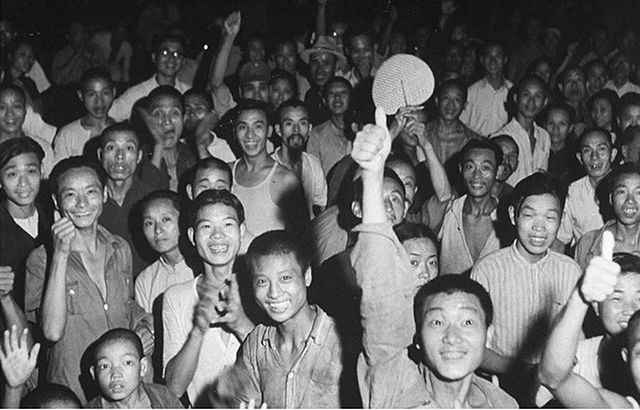
The Chinese Exclusion Act marked a turning point in American history, as the nation began transforming from a country of immigrants into one of gatekeeping. What began as a series of measures regulating Chinese travel and entry evolved into a sweeping federal law that imposed a 10-year ban on the immigration of Chinese laborers, which would later be extended and made effectively indefinite.
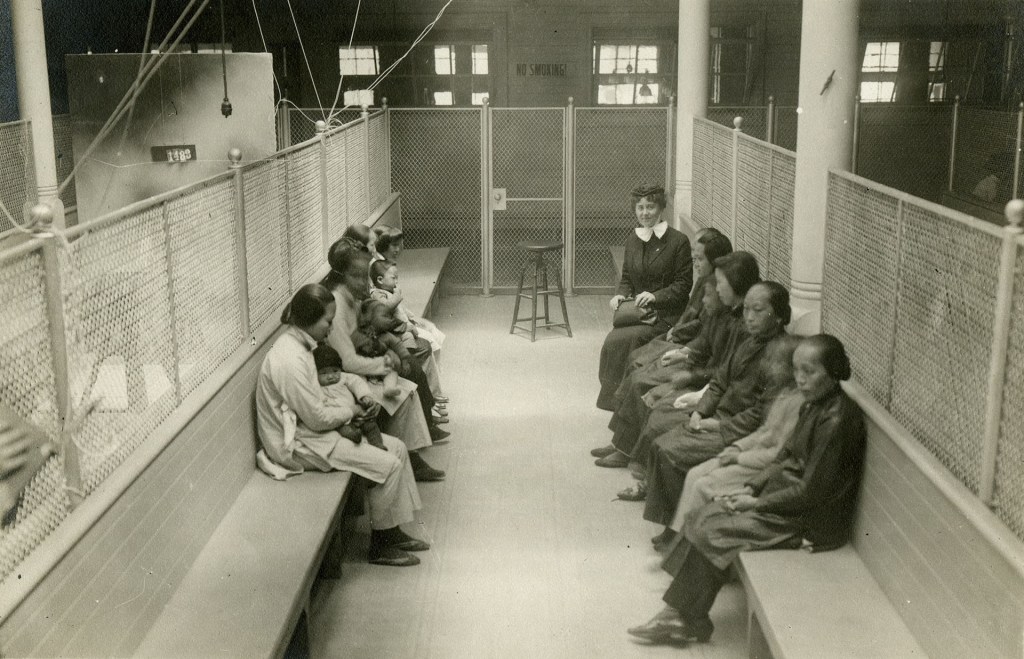
The Chinese Exclusion Act was not merely a measure to curb the influx of foreign individuals; it was a calculated effort to define the racial and cultural boundaries of the nation by criminalizing immigrant communities based on their racial otherness. During the exclusion era, Chinese and other Asian people were depicted as uncivilized men who abused their wives and trafficked women as prostitutes. The press portrayed them as cunning, immoral, and prone to crime. Every Chinese man or woman had to prove at the U.S. border that they were neither low-class laborers nor prostitutes. In other words, they had to prove their innocence before being suspected of any wrongdoing.
Background of Chinese Immigration to the US
In the 19th century, as slavery was abolished, the availability of transoceanic passages turned Asians, most of whom were victims of Euro-American colonization, into a potential replacement for slave labor. This led to the emergence of a new labor regime referred to as “indentured labor,” “contract labor,” or the “coolie trade.” Coolies were cheaper than slaves and, perhaps more importantly, were seen as a safeguard against the rising Black population in colonial territories after the Haitian Revolution, which deeply unsettled white colonists.
Between 1834 and 1930, more than 30 million South Asians left colonial India to work in British colonies across the Caribbean, Pacific, and Indian Ocean. While relatively few Indians reached the Americas, the Chinese became one of the first and largest Asian groups to migrate to North America.
The first Chinese immigrants to the United States were students and merchants, often sponsored by Christian missionaries. When these merchants returned to China with news of the California Gold Rush, hundreds of Chinese laborers rushed to the West Coast. Many traveled under a credit-ticket system, using future earnings in the U.S. to repay their passage to agents. This arrangement later fueled claims that Chinese immigrants were unfree laborers or “coolies.”
In 1864, when mostly Irish, white workers abandoned the grueling labor of building the Central Pacific Railroad, the company hired 50 Chinese workers as a trial. The Chinese proved so cost-effective that by the following year, the company employed around 15,000 Chinese laborers, making up nearly 90% of the workforce. Despite their key role, Chinese workers were excluded from Andrew Russell’s iconic photograph commemorating the completion of the railroad. A lesser-known image by the same photographer, taken minutes earlier, shows Chinese workers laying the final rail.

As Chinese immigration increased, American politicians and capitalists faced a dilemma. On the one hand, they relied on cheap labor to build the nation’s industrial infrastructure. On the other hand, they sought to preserve the so-called purity of the white race. Believing that most Chinese were unfree laborers under conditions akin to slavery, they viewed their presence as a threat to foundational American ideals such as liberty. The outcome was the Chinese Exclusion Act of 1882.
Pearl S. Buck’s China writings
While anti-Chinese bias ran rampant in the U.S., one woman, raised in China by a missionary family, helped open new cultural windows through her writing. In 1930, Pearl S. Buck published her first novel, East Wind: West Wind, portraying the struggles of Chinese women trapped in traditions such as arranged marriage and foot-binding. One of her protagonists is a Chinese man who travels to the U.S., marries an American woman, and faces family rejection. A story that hints early on at Buck’s literary commitment to bridging the Eastern and Western cultures.

Buck’s second novel, The Good Earth, which narrates the story of a Chinese farmer, became the best-selling book in the U.S. in 1931 and 1932, won the Pulitzer Prize for Fiction in 1932, and paved the way for her Nobel Prize in Literature in 1938. The novel had a major impact on American perceptions of Chinese people. In a private letter, journalist Helen Foster Snow described Buck’s greatest achievement: “Buck was able to communicate with the West in universal terms so that she for the first time gave Westerners the sense that the Chinese were human like us and comprehensible.” (Letter to Jane R. Cohen, May 18, 1978, Randolph College Special Collections)
Having spent much of her youth in China, Buck left at age 42 after a divorce and a break with her religious upbringing. She devoted her years in the U.S. to increasing public sympathy for China and raising her adopted children at her Pennsylvania home. In 1935, she married her publisher, Richard John Walsh (1887–1960), who became her closest partner in foreign policy activism during the tumultuous years of World War II.
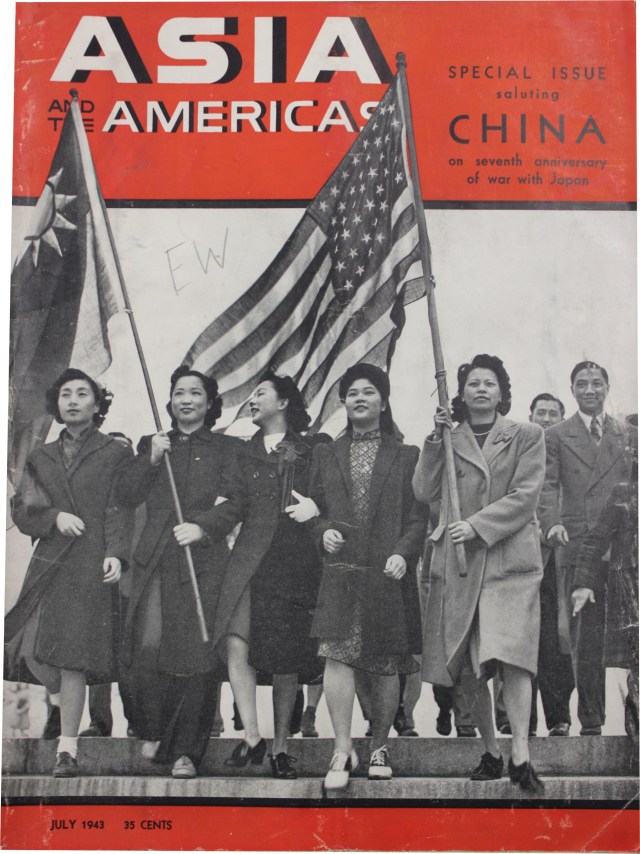
World War II gave Buck renewed purpose in advocating for the Chinese cause against Japanese occupation. With the U.S. and China now allies against fascism, Buck and Walsh became leaders of wartime citizen activism to influence American policy in East Asia. Buck served on the board of United China Relief, founded the East-West Association, and launched Asia magazine to foster American support for China. She corresponded directly with First Lady Eleanor Roosevelt, advising her on China-related matters. Buck’s vision extended beyond humanitarian relief: she championed Indian independence as a way to strengthen China’s position, advocated for anti-racist military policies to boost nonwhite soldier morale, and spoke out in defense of Japanese Americans facing racial discrimination.
Repealing the Chinese Exclusion Act
Within her broader mission to create a more just world, Buck viewed the Chinese Exclusion Laws as antithetical to American wartime alliances and the core values of human dignity and equality. Her husband, Richard J. Walsh, served as president of the Citizens Committee to Repeal Chinese Exclusion and Place Immigration on a Quota Basis. The group successfully lobbied for the repeal of the exclusion laws, resulting in the Magnuson Act of 1943. This legislation repealed thirteen exclusion acts passed between 1882 and 1913, set a quota of 105 annual Chinese immigrants, and granted Chinese residents in the U.S. the right to naturalize.

When signing the bill, President Franklin D. Roosevelt emphasized the symbolic and strategic significance of lifting the ban: “An unfortunate barrier between allies has been removed. The war effort in the Far East can now be carried on with a greater vigor and a larger understanding of our common purpose.” (Franklin D. Roosevelt, Statement on Signing the Bill to Repeal the Chinese Exclusion Laws. Online by Gerhard Peters and John T. Woolley, The American Presidency Project.)
Although restrictions on Chinese immigration would persist in various forms, the activism of Pearl S. Buck and others helped remove a major stain on America’s democratic ideals.
 China in WW2